SEO has become more important than ever, but it isn’t all meta tags and content. A huge part of the success you’ll see is tied up in the inevitable business negotiations. In this helpful Whiteboard Friday from August of 2018, our resident expert Britney Muller walks us through a bevy of smart tips and considerations that will strengthen your SEO negotiation skills, whether you’re a seasoned pro or a newbie to the practice.
Click on the whiteboard image above to open a high-resolution version in a new tab!
Video Transcription
Hey, Moz fans. Welcome to another edition of Whiteboard Friday. So today we are going over all things SEO negotiation, so starting to get into some of the business side of SEO. As most of you know, negotiation is all about leverage.
It’s what you have to offer and what the other side is looking to gain and leveraging that throughout the process. So something that you can go in and confidently talk about as SEOs is the fact that SEO has around 20X more opportunity than both mobile and desktop PPC combined.
This is a really, really big deal. It’s something that you can showcase. These are the stats to back it up. We will also link to the research to this down below. Good to kind of have that in your back pocket. Aside from this, you will obviously have your audit. So potential client, you’re looking to get this deal.
Get the most out of the SEO audit
☑ Highlight the opportunities, not the screw-ups
You’re going to do an audit, and something that I have always suggested is that instead of highlighting the things that the potential client is doing wrong, or screwed up, is to really highlight those opportunities. Start to get them excited about what it is that their site is capable of and that you could help them with. I think that sheds a really positive light and moves you in the right direction.
☑ Explain their competitive advantage
I think this is really interesting in many spaces where you can sort of say, “Okay, your competitors are here, and you’re currently here and this is why,”and to show them proof. That makes them feel as though you have a strong understanding of the landscape and can sort of help them get there.
☑ Emphasize quick wins
I almost didn’t put this in here because I think quick wins is sort of a sketchy term. Essentially, you really do want to showcase what it is you can do quickly, but you want to…
☑ Under-promise, over-deliver
You don’t want to lose trust or credibility with a potential client by overpromising something that you can’t deliver. Get off to the right start. Under-promise, over-deliver.
Smart negotiation tactics
☑ Do your research
Know everything you can about this clientPerhaps what deals they’ve done in the past, what agencies they’ve worked with. You can get all sorts of knowledge about that before going into negotiation that will really help you.
☑ Prioritize your terms
So all too often, people go into a negotiation thinking me, me, me, me, when really you also need to be thinking about, “Well, what am I willing to lose?What can I give up to reach a point that we can both agree on?” Really important to think about as you go in.
☑ Flinch!
This is a very old, funny negotiation tactic where when the other side counters, you flinch. You do this like flinch, and you go, “Oh, is that the best you can do?” It’s super silly. It might be used against you, in which case you can just say, “Nice flinch.” But it does tend to help you get better deals.
So take that with a grain of salt. But I look forward to your feedback down below. It’s so funny.
☑ Use the words “fair” and “comfortable”
The words “fair” and “comfortable” do really well in negotiations. These words are inarguable. You can’t argue with fair. “I want to do what is comfortable for us both. I want us both to reach terms that are fair.”
You want to use these terms to put the other side at ease and to also help bridge that gap where you can come out with a win-win situation.
☑ Never be the key decision maker
I see this all too often when people go off on their own, and instantly on their business cards and in their head and email they’re the CEO.
They are this. You don’t have to be that, and you sort of lose leverage when you are. When I owned my agency for six years, I enjoyed not being CEO. I liked having a board of directors that I could reach out to during a negotiation and not being the sole decision maker. Even if you feel that you are the sole decision maker, I know that there are people that care about you and that are looking out for your business that you could contact as sort of a business mentor, and you could use that in negotiation. You can use that to help you. Something to think about.
Tips for negotiation newbies
So for the newbies, a lot of you are probably like, “I can never go on my own. I can never do these things.” I’m from northern Minnesota. I have been super awkward about discussing money my whole life for any sort of business deal. If I could do it, I promise any one of you watching this can do it.
☑ Power pose!
I’m not kidding, promise. Some tips that I learned, when I had my agency, was to power pose before negotiations. So there’s a great TED talk on this that we can link to down below. I do this before most of my big speaking gigs, thanks to Mike Ramsey who told me to do this at SMX Advanced 3 years ago.
Go ahead and power pose. Feel good. Feel confident. Amp yourself up.
☑ Walk the walk
You’ve got to when it comes to some of these things and to just feel comfortable in that space.
☑ Good > perfect
Know that good is better than perfect. A lot of us are perfectionists, and we just have to execute good. Trying to be perfect will kill us all.
☑ Screw imposter syndrome
Many of the speakers that I go on different conference circuits with all struggle with this. It’s totally normal, but it’s good to acknowledge that it’s so silly. So to try to take that silly voice out of your head and start to feel good about the things that you are able to offer.
Take inspiration where you can find it
I highly suggest you check out Brian Tracy’s old-school negotiation podcasts. He has some old videos. They’re so good. But he talks about leverage all the time and has two really great examples that I love so much. One being jade merchants. So these jade merchants that would take out pieces of jade and they would watch people’s reactions piece by piece that they brought out.
So they knew what piece interested this person the most, and that would be the higher price. It was brilliant. Then the time constraints is he has an example of people doing business deals in China. When they landed, the Chinese would greet them and say, “Oh, can I see your return flight ticket? I just want to know when you’re leaving.”
They would not make a deal until that last second. The more you know about some of these leverage tactics, the more you can be aware of them if they were to be used against you or if you were to leverage something like that. Super interesting stuff.
Take the time to get to know their business
☑ Tie in ROI
Lastly, just really take the time to get to know someone’s business. It just shows that you care, and you’re able to prioritize what it is that you can deliver based on where they make the most money off of the products or services that they offer. That helps you tie in the ROI of the things that you can accomplish.
☑ Know the order of products/services that make them the most money
One real quick example was my previous company. We worked with plastic surgeons, and we really worked hard to understand that funnel of how people decide to get any sort of elective procedure. It came down to two things.
It was before and after photos and price. So we knew that we could optimize for those two things and do very well in their space. So showing that you care, going the extra mile, sort of tying all of these things together, I really hope this helps. I look forward to the feedback down below. I know this was a little bit different Whiteboard Friday, but I thought it would be a fun topic to cover.
So thank you so much for joining me on this edition of Whiteboard Friday. I will see you all soon. Bye.
Scoop up more SEO insights at MozCon Virtual this July
Don’t miss exclusive data, tips, workflows, and advice from Britney and our other fantastic speakers at this year’s MozCon Virtual! Chock full of the SEO industry’s top thought leadership, for the first time ever MozCon will be completely remote-friendly. It’s like 20+ of your favorite Whiteboard Fridays on vitamins and doubled in size, plus interactive Q&A, virtual networking, and full access to the video bundle:
Still not convinced? Moz VP Product, Rob Ousbey, is here to share five highly persuasive reasons to attend!
Sign up for The Moz Top 10, a semimonthly mailer updating you on the top ten hottest pieces of SEO news, tips, and rad links uncovered by the Moz team. Think of it as your exclusive digest of stuff you don’t have time to hunt down but want to read!
Conference season is here! Of course, this year it looks a bit different. Instead of signing in at the front table and snagging seats next to some new pals, you’ll be setting up your computer as the main stage.
For some, this is going to be a major learning curve. Virtual events can be tougher to follow and engage with. To help you out, we’ve compiled a list of best practices to show up ready and take on any online event you choose to attend this year.
Don’t forget, if you haven’t yet, there is still time to purchase your MozCon Virtual ticket!
To get the most out of your online event, you need to go in with an intention. That way you’ll be more likely to gain something from the experience.
Ask yourself, what are you hoping to achieve? Some examples could be:
Gain a business opportunity
Learn more about how to recover from the latest algorithm update
Find ways to increase efficiency within your SEO processes
Feel more confident selling your services
Schedule accordingly
Many events will provide you with schedules ahead of time — look at them! (Pssst…if you haven’t yet, now is the perfect time to check out the agenda for MozCon Virtual.)
These schedules can help you go into the conference with a clear idea of how you’re going to spend your time. Going in with a plan will allow you to focus on the content of the event and your intentions each day, as opposed to wasting time frantically trying to decide what sessions you’re going to attend.
Choosing your sessions
Once you know what your intentions are and you have the event schedule, determine what will be the most beneficial content for you. This can be especially helpful when the event has multiple tracks, very few break times, etc.
Choosing your sessions may come down to a process of elimination, and it’s much easier to eliminate sessions when you have some sort of goal in mind.
Things to consider when choosing your sessions are:
The topic
The speaker
The time
The availability of on-demand videos post-conference
Your intention may be to broaden your horizons this year, so instead of opting to see presentations with the same topics or speakers that you saw last year, you may see someone new discussing something you find interesting but haven’t had time to explore. You may have a tight schedule and not be able to make anything past 3pm. If some of the sessions will be available after the conference, it may be worth checking out topics you wouldn’t have otherwise.
Know when to take a break
When you’re planning out your schedule, you need to make sure you build in time for breaks. This means time to eat, time to decompress, time to refill your coffee cup, and time to do work or home stuff.
Conferences usually have a lot of breaks and that’s for good reason. Ideally, you’re going to be learning a lot. But if you try to learn it all at once without giving your brain a break, very little of it will stick.
So, be sure to listen to your body. If you start to feel foggy or overwhelmed, take a break, grab some water, and move around a bit.
Build in networking time
Something else you want to account for when planning your virtual event agenda is when you’re going to network. Some conferences will have time to network built in, but others won’t.
You’ll want to dedicate time to get to know the other attendees by joining conversations and adding people on social media. This will look a bit different in the virtual space, as you won’t be meeting for coffee or chatting in the lobby, but try to stay creative! Zoom chats and video calls are a great way to connect with new or old friends.
At the end of each day, take some time to reflect. Think back to what your intention was, what you did throughout the day to fulfill that intention, and what you can put into action moving forward.
This is a great exercise to ensure you’re making the most out of the event. Far too often, we take in all of the information and do nothing with it! That’s why we like to suggest creating at least three action items at the end of each day.
Gather the essentials
Okay, it’s the first day of the conference and you’re about to jump in front of the computer. BUT! Before you do that, you need to make sure you have everything you need to be successful.
Get a clean notebook or start a fresh doc
Having a clean slate for notes will help you stay focused while attending any conference (virtual or otherwise). So grab a new, crisp notebook or create a new document file on your computer before you get started.
If you decide to go the computer route, be sure you close all other tabs and turn off notifications! You want to be sure that your attention stays on the conference.
Taking notes during a virtual conference
With that new notebook or document of yours, you’ll want to take the most effective notes possible. With that in mind, here are a few things to take note of:
What you learned
How can you apply it
What can you share with your team
To ensure that you’re on track to capture each of these things, when you go into each session, write your intention for the session at the top of your notes page. Then, divide your pages by “what I learned,” “how to apply,” and “what to share.” This will keep your notes nice and organized and give you a visual cue on whether or not you’re getting what you expected out of the session. It will also make your end-of-day recap much easier.
When it comes to virtual events, one of the biggest benefits is that you often get the slide decks and video bundles afterward. We suggest finding out whether the event you’re attending offers those things before you start taking notes, as it may lighten your note-taking burden a bit.
Have some snacks, water, and coffee (or tea)
Perhaps the most important things to have during a virtual conference are the snacks and drinks! As you know, at MozCon, we take this part very seriously, so we expect nothing less if you attend our virtual event.
Brain food can help you stay focused. Some of our favorite snacks are granola bars, nuts, veggies, and of course, donuts. However, you have full control over the spread this year.
Be sure to also have plenty of water and your favorite caffeinated beverage as well!
Show up
You’re ready to go! All that’s left is showing up. With virtual events, this can be hard to do. Especially if you know that the content is going to be available after the event is over. But there is so much to be gained by being a part of the live event and the conversations happening around it.
So show up, and show out!
PS: If you’re looking for a virtual event to attend this year, Roger is still hoping to give you a virtual hug at MozCon Virtual 2020.
Sign up for The Moz Top 10, a semimonthly mailer updating you on the top ten hottest pieces of SEO news, tips, and rad links uncovered by the Moz team. Think of it as your exclusive digest of stuff you don’t have time to hunt down but want to read!
Page speed has always been a crucial part of SEO work, and as more companies make the shift to online operations, optimization becomes more important than ever. However, it’s a complex subject that tends to be very technical. What are the most crucial things to understand about your site’s page speed, and how can you begin to improve? To help you answer these questions, we’re sharing this popular episode of Whiteboard Friday (originally published in February 2019) where Britney Muller goes over what you need to know to get started.
Click on the whiteboard image above to open a high resolution version in a new tab!
Video Transcription
Hey, Moz fans. Welcome to another edition of Whiteboard Friday. Today we’re going over all things page speed and really getting to the bottom of why it’s so important for you to be thinking about and working on as you do your work.
At the very fundamental level I’m going to briefly explain just how a web page is loaded. That way we can sort of wrap our heads around why all this matters.
How a webpage is loaded
A user goes to a browser, puts in your website, and there is a DNS request. This points at your domain name provider, so maybe GoDaddy, and this points to your server where your files are located, and this is where it gets interesting. So the DOM starts to load all of your HTML, your CSS, and your JavaScript. But very rarely does this one pull all of the needed scripts or needed code to render or load a web page.
Typically the DOM will need to request additional resources from your server to make everything happen, and this is where things start to really slow down your site. Having that sort of background knowledge I hope will help in us being able to triage some of these issues.
Issues that could be slowing down your site
What are some of the most common culprits?
First and foremost is images. Large images are the biggest culprit of slow loading web pages.
Hosting can cause issues.
Plugins, apps, and widgets, basically any third-party script as well can slow down load time.
Your theme and any large files beyond that can really slow things down as well.
Redirects, the number of hops needed to get to a web page will slow things down.
Then JavaScript, which we’ll get into in a second.
But all of these things can be a culprit. So we’re going to go over some resources, some of the metrics and what they mean, and then what are some of the ways that you can improve your page speed today.
Page speed tools and resources
The primary resources I have listed here are Google tools and Google suggested insights. I think what’s really interesting about these is we get to see what their concerns are as far as page speed goes and really start to see the shift towards the user. We should be thinking about that anyway. But first and foremost, how is this affecting people that come to your site, and then secondly, how can we also get the dual benefit of Google perceiving it as higher quality?
We know that Google suggests a website to load anywhere between two to three seconds. The faster the better, obviously. But that’s sort of where the range is. I also highly suggest you take a competitive view of that. Put your competitors into some of these tools and benchmark your speed goals against what’s competitive in your industry. I think that’s a cool way to kind of go into this.
Chrome User Experience Report
This is Chrome real user metrics. Unfortunately, it’s only available for larger, popular websites, but you get some really good data out of it. It’s housed on BigQuery*, so some basic SQL knowledge is needed.
*Editor’s note: We’ve edited this transcript for accuracy. In the video Britney said “BigML,” but intended to say BigQuery. It’s hard filming an advanced-topic Whiteboard Friday in a single take! 🙂
Lighthouse
Lighthouse, one of my favorites, is available right in Chrome Dev Tools. If you are on a web page and you click Inspect Element and you open up Chrome Dev Tools, to the far right tab where it says Audit, you can run a Lighthouse report right in your browser.
What I love about it is it gives you very specific examples and fixes that you can do. A fun fact to know is it will automatically be on the simulated fast 3G, and notice they’re focused on mobile users on 3G. I like to switch that to applied fast 3G, because it has Lighthouse do an actual run of that load. It takes a little bit longer, but it seems to be a little bit more accurate. Good to know.
Page Speed Insights
Page Speed Insights is really interesting. They’ve now incorporated Chrome User Experience Report. But if you’re not one of those large sites, it’s not even going to measure your actual page speed. It’s going to look at how your site is configured and provide feedback according to that and score it. Just something good to be aware of. It still provides good value.
Test your mobile website speed and performance
I don’t know what the title of this is. If you do, please comment down below. But it’s located on testmysite.thinkwithgoogle.com. This one is really cool because it tests the mobile speed of your site. If you scroll down, it directly ties it into ROI for your business or your website. We see Google leveraging real-world metrics, tying it back to what’s the percentage of people you’re losing because your site is this slow. It’s a brilliant way to sort of get us all on board and fighting for some of these improvements.
Pingdom and GTmetrix are non-Google products or non-Google tools, but super helpful as well.
Site speed metrics
So what are some of the metrics?
What is first paint?
First paint is he first non-blank paint on a screen. It could be just the first pixel change. That initial change is considered first paint.
What is first contentful paint?
First contentful paint is when the first content appears. This might be part of the nav or the search bar or whatever it might be. –That’s the first contentful paint.
What is first meaningful paint?
First meaningful paint is when primary content is visible. When you sort of get that reaction of, “Oh, yeah, this is what I came to this page for,” that’s first meaningful paint.
What is time to interactive?
Time to interactive is when it’s visually usable and engage-able. So we’ve all gone to a web page and it looks like it’s done, but we can’t quite use it yet. That’s where this metric comes in. So when is it usable for the user? Again, notice how user-centric even these metrics are. Really, really neat.
DOM content loaded
The DOM content loaded, this is when the HTML is completely loaded and parsed. So some really good ones to keep an eye on and just to be aware of in general.
Ways to improve your page speed
HTTP/2
HTTP/2 can definitely speed things up. As to what extent, you have to sort of research that and test.
Preconnect, prefetch, preload
Preconnect, prefetch, and preload really interesting and important in speeding up a site. We see Google doing this on their SERPs. If you inspect an element, you can see Google prefetching some of the URLs so that it has it faster for you if you were to click on some of those results. You can similarly do this on your site. It helps to load and speed up that process.
Enable caching & use a content delivery network (CDN)
Caching is so, so important. Definitely do your research and make sure that’s set up properly. Same with CDNs, so valuable in speeding up a site, but you want to make sure that your CDN is set up properly.
Compress images
The easiest and probably quickest way for you to speed up your site today is really just to compress those images. It’s such an easy thing to do. There are all sorts of free tools available for you to compress them. Optimizilla is one. You can even use free tools on your computer, Save for Web, and compress properly.
Minify resources
You can also minify resources. So it’s really good to be aware of what minification, bundling, and compression do so you can have some of these more technical conversations with developers or with anyone else working on the site.
So this is sort of a high-level overview of page speed. There’s a ton more to cover, but I would love to hear your input and your questions and comments down below in the comment section.
I really appreciate you checking out this edition of Whiteboard Friday, and I will see you all again soon. Thanks so much. See you.
Scoop up more SEO insights at MozCon Virtual this July
Don’t miss exclusive data, tips, workflows, and advice from Britney and our other fantastic speakers at this year’s MozCon Virtual! Chock full of the SEO industry’s top thought leadership, for the first time ever MozCon will be completely remote-friendly. It’s like 20+ of your favorite Whiteboard Fridays on vitamins and doubled in size, plus interactive Q&A, virtual networking, and full access to the video bundle:
Sign up for The Moz Top 10, a semimonthly mailer updating you on the top ten hottest pieces of SEO news, tips, and rad links uncovered by the Moz team. Think of it as your exclusive digest of stuff you don’t have time to hunt down but want to read!
Re-imagining MozCon hasn’t been easy. I won’t lie — I’ll miss seeing so many of you in person, and, yes, I’ll miss the magic of the big stage. We’re working hard to make this year special, including leveling up our speakers for their remote sessions. I recently shared my own set-up on Twitter:
This stirred up quite a bit of interest in our set-up and equipment list, so thanks to Cheryl on our events team for filling in the blanks for me, and thanks to our amazing A/V partners at Seamless Events for helping this all come together. Also, many thanks to our speakers who gave me permission to share their photos and let you in on some of the magic behind in front of the curtain.
MozCon Virtual equipment list
Before we get to the fun part (or maybe this is the fun part for you), here’s the standard equipment list our A/V team used for MozCon Virtual (some speaker set-ups may vary):
Note that some of the models/sizes linked to in [more info] may not be exact matches to our kit. While Moz doesn’t endorse any of these specific products, I’ve personally been pleasantly surprised at how affordable and accessible decent A/V equipment has become, and quarantine is making the value proposition even stronger.
The presenter remote on my desk is not part of the kit, but is my own Logitech R400 (more info). I’ve had this one for almost six years, and wish I’d bought my own remote sooner. I use it even when I’m presenting at my desk or practicing on a plane (that may say more about me than about Logitech, admittedly). The LEGOs and half-finished LaCroix were not included in the speaker kit, although LEGOs factor heavily into my MozCon presentation.
Sneak-peeks with our speakers
Just for fun, here’s a sneak-peek at a few of our speakers and their set-ups.
I was going to make all of the photos 16:9 like the one above, but Dana ruined that by having this amazing skylight in her loft, so all of the speakers are getting big photos now.
Dana’s MozCon Virtual session: “Red Flags: Use a discovery process to go from red flags to green lights”
Shannon braved a trek to the office just for MozCon and wins the award for looking more professional than the rest of us. I cleaned my home office. That counts for something, right?
Shannon’s MozCon Virtual Session: “Great Expectations: The Truth About Digital PR Campaigns”
Robin went for the rare standing set-up. Robin has also delegated his copy of “Pandemic” to being a monitor stand, as it’s far too depressing to play right now.
Robin’s MozCon Virtual Session: “Whatever You Do, Put Billboards in Seattle – Getting Brand Awareness Data from Google”
I’m not sure if Rob is expertly offsetting his window light with two ring lights or if we just forgot to send him the instruction sheet. He’s my boss, so I’ll assume the former.
Rob’s MozCon Virtual Session: “A Novel Approach to Scraping Websites”
Last, but certainly not least, our own CEO, Sarah Bird, who apparently gets to have a hammock outside her office, because she’s the boss.
Sarah’s MozCon Virtual Session: “Welcome to MozCon Virtual 2020 + the State of the Industry”
The idea for this post was a little last-minute, and I didn’t want to personally annoy every speaker with photo requests, so a big thanks to all of our speakers for going the extra mile to make the shift to a virtual event with us and set up all of this equipment. Special thanks to Cheryl and Carly for all of their work pulling this plan together.
What’s your home set-up?
Have you leveled up your A/V set-up and you’re just itching to show it off? Let us know about your favorite equipment in the comments, or send us your home-office photos on Twitter (@Moz).
Hope to see you at MozCon Virtual on July 14-15. No need to book a hotel or flight, so there’s still time to join us, and the $129 special price includes all speaker videos!
Sign up for The Moz Top 10, a semimonthly mailer updating you on the top ten hottest pieces of SEO news, tips, and rad links uncovered by the Moz team. Think of it as your exclusive digest of stuff you don’t have time to hunt down but want to read!
Over the years, I’ve often referred to our link building work as “campaigns”, which isn’t wrong, but isn’t completely right, either. I think that as an industry we need to alter our mindset to focus on what link building should be: an ongoing, integrated, business-as-usual activity.
Link building processes that work for brands now and that will continue to work in the future need to sit closer to the rest of the business. This means tighter integration with other disciplines, or at the very least, acknowledgment that link building isn’t a siloed activity or dark art like it used to be.
In this post, I’d like to propose how we should think about link building and share some ways to make it more sustainable, efficient, and effective.
The problem with campaigns
I want to start by being super clear on something, and I make no apologies for reiterating this throughout this post: Link building campaigns aren’t a bad thing. My core point is that they should be thought of as one piece of the puzzle — not something we should focus all of our time and attention on.
“Campaign”, in the context of link building or digital PR, implies a few things:
It has a start and an end point
It is a one-off activity
It is about a specific “thing”, whether that be a topic, product, or piece of content
There is nothing wrong with these as such, but link building shouldn’t be thought about only in these ways. If link building is seen as a series of one-off activities, or about a specific thing and with a start and end point, it’s never going to be integrated into a business the way it should be. It will always sit around the edges of marketing activity and not benefit the bottom line as much as it could.
Even if you are reading this thinking that you’re okay because you have lots of campaigns lined up — maybe one a week, one a month, or one a quarter — the core problems still exist, but at a more zoomed-out level.
As digital marketers, we want link building to be:
Taken seriously as a tactic which helps support SEO within a business
Integrated with other areas to allow for efficiency and wider benefits
Fit into the overarching digital strategy of a business
Have measurable, consistent results
Let me demonstrate the final point with the graph below, which is the monthly performance of an Aira client on a 6-8 week campaign schedule:
On the face of it, this looks pretty good. We built over 200 links in 12 months, and were ahead of target in terms of individual campaign objectives.
This graph is the reality of link building campaign execution. We were honest and up-front with clients about the results, and those peaks and dips are perfectly normal.
But it could (and should) be a lot better.
Let’s take a quick step back.
An uncomfortable truth
The uncomfortable truth for many link builders is that a business shouldn’t really need to worry about link building as an intentional, proactive activity. Instead, links should be a natural consequence of a fantastic product or service which is marketed and branded well.
However, companies in this position are the exception rather than the rule, which means that as link builders, we still have a job!
I’d argue that there are only a relatively small number of businesses that truly don’t need to worry about link building. Think of the likes of well-established and popular brands like Apple, McDonalds, Amazon and Coca-Cola. These companies truly are the exception, rather than the rule.
Trying to be an exception and aiming to reach the nirvana of never actively worrying about link building should absolutely be your goal. Putting efforts into areas such as product development, customer service, content strategy, and brand building will all pay dividends when it comes to link building. But they all take time and you need to generate organic traffic sooner rather than later in order to grow the business.
Link building, as part of your larger integrated and robust digital strategy can get you there quicker. I worry that businesses often leave money on the table by waiting for that nirvana to come. They may indeed get there, but could they have gotten there sooner?
The question then becomes, how do they move quicker toward that ideal state, and what does link building look like in the interim? Running campaigns can help for sure, but you’re not really building upward as quickly as you could be.
This is the crux of my worry and problem with running link building campaigns and allowing our strategies to lean on them too heavily:
When the campaigns stop, so will the links.
I know, I know — Aira launches campaigns all the time.
Yes, we have launched many, many link building campaigns at Aira over the years and have been nominated for campaign-specific awards for some of them. I’ve even written about them many times. Campaign-led link building has a very valuable part to play in the world of link building, but we need to reframe our thinking and move away from campaigns as the primary way to generate links to a business.
Driving the right behaviors
It’s not just about results. It’s about driving the right behaviors within businesses, too.
Putting link building in the corner of a one-off project or campaign-led activity is not going to encourage habitual link building. It will drive behaviors and thinking which you don’t really want, such as:
Link building is a line item which can be switched on and off
Internal processes have to bend or break in order to accommodate link building
There is little desire or motivation for wider team members to learn about what link builders do
Link building is an isolated activity with no integration
Link building results aren’t consistent (you get those huge peaks and dips in performance, which can bring into question the marketing spend you’re being given)
Working under these pressures is not going to make your life easy, nor are you going to do the best job you possibly can.
I worry that as an industry, we’ve become too focused on launching campaign after campaign and have gotten too far away from effecting change within organizations through our work.
As digital marketers, we are trying to influence behaviors. Ultimately, it’s about the behaviors of customers, but before that point it’s about influencing stakeholders — whether you’re an agency or in-house SEO, our first job is to get things done. In order to do that, link building needs to be thought of as a business-as-usual (BAU) activity. Campaigns have a place, but are part of a much, much bigger picture. Link building needs to get to the point where it’s not “special” to build links to a content piece, it’s just done. If we can get there, not only will we accelerate the businesses we work with toward link building nirvana, but we will add much, much more value to them in the meantime.
Link building as a BAU activity
It is my firm belief that in order to mature as an industry, and specifically as an activity, link building needs to be understood much more than it currently is. It still suffers from the issues that plagued SEO for many years in the early days when it truly was a dark art and we were figuring it out as we went along.
Don’t get me wrong, we’ve come a long way, especially since April 2012 (can you really believe it was over eight years ago?!) when link building began evolving into a content-led practice thanks in part to the Penguin update.
But we still have further to go.
We need to get out of the corner of “launching a campaign” and train our bosses and clients to ask questions like, “How can link building help here?” and “Is there a link building opportunity in this activity?”.
A case study
The best way I can explain this shift in thinking is to give you a real example of how we’ve done it at Aira. I can’t give you the exact client, but I can give you an overview of the journey we’ve been on with them, supporting an SEO team that is relentlessly committed to getting things done — the perfect partners for such an initiative.
I should also point out that this has never been easy. We are on this journey with a number of our clients, and some of them are barely into it. The examples here show what happens when you get it right — but it does take time, and the reality is that it may never happen for some businesses.
Where it started
One campaign. That was it. One shot to get links and show the client what we could do.
We failed.
This was back in 2016. We were lucky in that the client trusted the process and understood why things had gone wrong on this occasion. So, they gave us another chance and this time did a great job.
From there, the project grew and grew to the point where we were launching scaled campaigns like clockwork and getting links consistently. All was well.
Then I was asked a question by someone on the client’s team:
“What’s the evolution of our link building?”
Whilst link building is never far from my mind, I didn’t have a mental model to answer this straight away with any conviction — particularly given what I knew about this client and their industry. I took some time to think about it and consolidate a bunch of observations and opinions I’d actually had for years, but never really made concrete.
Side note: It’s often hard to take a step back from the day-to-day of what you’re doing and think about the bigger picture or the future. It’s even more difficult when you’re growing a business and generally doing good work. It can be hard to justify “rocking the boat” when things are going well, but I’ve learned that you need to find time for this reflection. For me at that point in time, it took a direct question from my client to force me into that mindset.
My answer
I confirmed that our existing model of link building for them was something that was likely to continue working and adding value, but that it should NOT be our sole focus in the coming years.
Then, I explained what I’ve talked about in this post thus far.
I told them that our work wasn’t good enough, despite them being one of our happiest, most long-standing clients. We were getting hundreds of links a month, but we could do better.
Running campaign after campaign and getting links to each one would not be good enough in the future. Sure it works now, but what about in two years? Five?? Probably only partly.
We knew we needed to bridge the gap between different content types:
Content for links (aka campaigns)
Content for traffic (informational and transactional pages)
Content for building expertise and trust
We’d only been focusing on the first one, pretty much in isolation. We’d come up with some relevant topic ideas, build them out and get links. Job done.
This wouldn’t be good enough a few years down the road, because link building would be taking place in a small pocket of a very large organization with limited integration.
It’s now been over a year since that conversation and guess what? Our campaigns are still working great, but we are evolving to do so much more.
What happened
If you haven’t taken a look at what else your business is doing and where link building can add value, this is the first step towards better integration, and thus better link building. By the time the conversation above happened, we’d already recognized the need to integrate with other teams within the client’s organization, so we had a head start.
With the help of the client’s SEO team, we started to discover other activities within the organization which we could add value to or leverage for greater wins:
The traditional marketing team had been running campaigns for years on different industry topics. Some of these crossed over with the topics we’d created content for.
The internal PR team had lots of activity going on and had often seen our coverage pop up on their trackers. As it turned out, they were just as keen to meet us and understand more about our processes.
The brand team was starting to review all on-site assets to ensure conformity to brand guidelines. Working with them was going to be important moving forward for consistency’s sake.
With our help, the client were building out more informational content related to their products, with us helping brief their internal copywriters.
All of these opportunities sowed the seeds for a new focus on the evolution of link building, and pushed us to move quicker into a few things including:
Running joint projects with the internal PR team where we collaborate on ideas and outreach that don’t just focus on data visualization
Running ideation sessions around topics given to us by the SEO team, which are also focused on by their traditional marketing team
Building relationships with several subject matter experts within the organization who we are now working with and promoting online (more on this below)
Testing the informational product content for link building after noticing that a few pieces naturally attracted links
Working alongside the PR team to carry out brand-reclamation-style link building
Where we are now
Just one year from that open and honest conversation, we have been able to show our value beyond launching campaign after campaign whilst still building links to the client’s content. This will hold value for years to come and mean that their reliance on campaigns will be reduced more and more over time.
We’re making good progress toward taking our reliance off campaigns and making it part of our strategy — not all of it. Yes, campaigns still drive the majority of links, but our strategy now includes some key changes:
All campaigns (with the odd exception) are evergreen in nature, can always be outreached, and have the ability to attract links on their own.
We are launching long-form, report-style content pieces that demonstrate the authority and expertise the client has in their industry, and then building links to them. (They’re far slower in terms of getting links, but they are doing well.)
We are raising the profile of key spokespeople within the business by connecting them with writers and journalists who can contact them directly for quotes and comments in the future.
We are doing prospecting and outreach for informational content, aiming to give them a nudge in rankings which will lead to more links in the future (that we didn’t have to ask for).
Link building isn’t quite a BAU activity just yet for this client, but it’s not far off from becoming one. The practice is taken seriously, not just within the SEO team, but also within the wider marketing team. There is more awareness than there has ever been.
Content strategy framework
I want to share the framework which we’ve used to support and visualize the shift away from campaigns as our sole link building strategy.
We’ve been aware for a while that we need to ensure any link building work we do is topically relevant. We’d found ourselves defaulting to content which was campaign-led and focused on links, as opposed to content that can serve other purposes.
Link builders need to take a long, hard look at the topics we want our clients and businesses to be famous for, credible to talk about, and that resonate with their audience. Once you have these topics, you can start to plan your content execution. After that, you’ll start to see where link building fits in.
Contrast this with the approach of “we need links, let’s come up with some relevant content ideas to help do that.” This can work, but isn’t as effective.
To help clients shift their strategies, we put together the framework below. Here’s how it works:
Let’s imagine we sell products that help customers sleep better. We may come up with the following themes and topics:
Notice that “Campaigns” is only one format. We’re also acknowledging that topics and themes can not only lead to other forms of content (and links), but also that our KPIs may not always be just links.
If we put together a long-form content guide on the science of sleep, it may not get on the front page of the New York Times, but it may get a slow, steady stream of links and organic search traffic. This traffic could include potential customers for a sleep product.
Once you have a specific topic in mind, you can go deeper into that topic and start thinking about what content pieces you can create to truly demonstrate expertise and authority. This will differ by client and by topic, but it could look something like this:
In this case, the blue circles denote a topic + format which may be link-worthy. While the orange ones denote a valuable execution that aren’t as link-worthy, we may still want to create this content for longer-term link and traffic generation.
To wrap up
Link building campaigns still have huge amounts of value. But if that’s all you’re doing for clients, you’re leaving opportunities behind. Think bigger and beyond campaigns to see what else can be done to move you and your business closer to link building nirvana.
Sign up for The Moz Top 10, a semimonthly mailer updating you on the top ten hottest pieces of SEO news, tips, and rad links uncovered by the Moz team. Think of it as your exclusive digest of stuff you don’t have time to hunt down but want to read!
Fractl has produced thousands of content marketing campaigns across every topic, and for the past seven years, we’ve been keeping track of each and every campaign in order to refine and improve the content we produce on behalf of our clients.
In my last post for Moz, I explained how to set realistic digital PR expectations for your content based on your niche. In this topic, I want to dive a little bit deeper into the data and share insights about how the source of your content can be just as important in determining how your content will perform.
In this analysis, I looked at 1,474 client content campaigns across six different data source categories:
Client data
Social media
Participatory methods
Publicly available data
Survey
Germ swab
It’s important to note that there are countless other data sources that we use for content campaigns every day at Fractl that are not mentioned in this article. In this analysis, each category has at least 20 campaigns, while some categories have several hundred campaigns.
It’s also important to note that averages were collected by excluding upper outliers. For campaigns that went “viral” and performed well above the norm, we excluded them in the calculation so as not to skew the averages higher.
In addition to sharing link and press averages, I will also be walking through how to produce pressworthy, sharable content from each data source and providing examples.
Managing expectations across content types
Across the entire sample of 1,474 campaigns, a project on average received 24 dofollow links and 89 press mentions in total.
A press mention is defined as any time the content campaign was mentioned on a publisher’s website.
There were some individual data source category averages that were on par with the sample average, while other categories deviated greatly from the sample average.
Publicly available data
For almost any niche out there, you can bet there is a publicly available data set available for use. Some examples include data from the CDC, the U.S. Census, colleges and universities, the WHO, and the TSA. The opportunities really are endless when it comes to using publicly available data as a methodology for your content.
While free data sets can be a treasure trove of information for your content, keep in mind that they’re not always the simplest to work with. They do require a lot of analysis to make sense of the massive amount of information in them, and to make the insights digestible for your audience.
Take for example a campaign we produced for a client called Neighborhood Names. The data was free from the US Census, but in order to make any sense of it, our researchers had to use QGIS, Python, text-mining, and phrasemachine (a text analysis API) just to narrow it down to what we were looking for.
And what were we looking for? Looking at neighborhood names across America seems boring at first, until you realize that certain words correspond to wealth.
I was the outreach specialist for this project, and by using the wealth angle, I was able to secure two notable placements on CNBC as well as a press mention on MSN. The project quickly made its way around the internet after that, earning 76 dofollow links and 202 total press mentions by the end of our reporting period.
Survey
Unlike scouring the internet for free data, using a survey as a methodology can be more costly. That being said, there is one major advantage to using a survey to shape your content: you can find out anything you want.
While publicly available data will tell a story, it’s not always the story you want to tell, and that’s where surveys come in.
Of course, when it comes to surveys, anyone can create one without paying attention to research method best practices. That’s one of the problems we need to address. With “fake news” in the forefront of everyone’s minds in 2020, building trust with journalists and editors is of the utmost importance.
As content creators, we have a responsibility to ensure that content is not only attention-grabbing and entertaining, but also accurate and informative.
Survey campaigns, in particular, require you to analyze responses through a rigorous methodological lens. When collecting data for surveys, be sure to pay close attention to ethical upholdance, data validity, and fair visual representations.
Germ swab
From my own personal experience, germ swab content campaigns are the most fun, and often, the most disturbing. Fractl did some research a while back about the emotions that make content go viral, and oftentimes, germ swab campaigns hit all of the right emotions in the viral equation.
Negative emotions like disgust are often evoked when reviewing the results of germ swab campaigns. Our study found that when negative emotions are paired with emotions like anticipation or surprise, they can still achieve viral success (internet viral, not germ viral). What is more surprising than finding out the airplane tray table is dirtier than a toilet seat?
Publishers around the world seemed to think the content was surprising, too. This campaign performed above the norm for a typical content campaign earning 38 dofollows and 195 total press mentions — and this was before the COVID-19 pandemic.
Participatory methods
Participatory methods are campaigns that require active participation for the methodology. These are unique ideas — no two are alike. Some examples of campaigns that fall under the participatory methods category are when we had team members do a 30-day squat challenge, asked respondents to draw brand logos from memory, or when we literally drove from D.C. to NYC with a dash cam to record traffic violations.
These campaigns have a certain level of risk associated with them. They require a lot of upfront effort and planning without the promise of any return — and that’s scary for clients and for our team who put in tremendous effort to pull them off.
As you can see from the chart above, however, these ideas collectively performed right on par with other campaign types, and even better than survey methodologies for both the number of dofollow links and press mentions. In order to reap big benefits, it seems you need to be willing to take a big risk.
Social media
Social medIa as a data source is almost a no-brainer, right up there with survey methodologies and publicly available data sets. Unlike participatory methods campaigns, you don’t have to leave your computer in order to produce a campaign based on social media data.
Through our seven years of content creation, Fractl has produced campaigns based on data scrapes from Twitter, Instagram, Facebook, LinkedIn, Reddit, and more. From this experience, we know firsthand what kinds of social campaigns work and which ones fall flat.
The best thing about using social media as a source for content is that it can be applied to all verticals.
The biggest lesson we’ve learned from producing content based on social media data is that the methodology is typically subjective, so you need to keep the project lighthearted in nature in order to earn major coverage.
For example, we produced a campaign for a client in which we looked at Instagram posts with the hashtag #sexy and a geolocation. From this, we were able to glean the “sexiest” countries in the world as well as U.S. states.
While it would be impossible to learn what the actual sexiest places in the world were, (what does that even mean?) we were able to produce a fun campaign that used geo-bait to appeal to lighthearted publishers, like Glamour, E! Online, Women’s Health, and Elite Daily.
Make sure that no matter the topic, whatever you produce contributes to an ongoing conversation. Statistics that don’t point to anything meaningful won’t be relevant for writers actually trying to add to the conversation.
Client data
Client data is often the most underappreciated data source for content marketers. You may be sitting on a wealth of actionable industry insights and not even know it.
You might think of internal data as only being useful for improving your internal processes at work, but it can also be valuable outside of your organization.
Unlike publicly available data, internal data is never-before-seen and 100% unique. Journalists eat this up because it means that you’re providing completely exclusive resources.
Think of this article, for example. This article is filled with data and insights that Fractl has gleaned after producing thousands of content marketing campaigns.
An added bonus of using internal data to craft your content is that, according to our analysis, it performs on par with surveys. Unlike surveys, though, it’s completely free.
Conclusion
No matter what methodology you’re using or vertical you’re creating content for, it’s important to realize that as content creators, we have an ethical and moral responsibility to create with an audience in mind.
With “fake news” on the forefront of everyone’s minds, building and maintaining trust with writers and editors is of the utmost importance.
All of the content you produce and promote must be assessed through a rigorous methodological lens to ensure that content is accurate and informative as well as eye-grabbing and entertaining.
Regardless of your methodology, if you don’t take the proper steps to make sure your data sources are accurate, you are contributing to the fake news epidemic.
Sign up for The Moz Top 10, a semimonthly mailer updating you on the top ten hottest pieces of SEO news, tips, and rad links uncovered by the Moz team. Think of it as your exclusive digest of stuff you don’t have time to hunt down but want to read!
Link building is never-ending in SEO, but a little creativity and smart tactics can help you ferret out great link opportunities from their hiding spots. In this episode of Whiteboard Friday, Britney Muller kicks off a series on modern link building (including the sage advice: let people choose their own anchor text!)
Click on the whiteboard image above to open a high resolution version in a new tab!
Video Transcription
Hey, Moz fans. Welcome to another edition of Whiteboard Friday. Today we are going to be looking at the easiest ways for you to get backlinks to your website. None of these involve content creation whatsoever.
Really excited to dive into this. It will be part of a larger “Link Building in 2020 Series and Beyond.” So really excited to dive into some of the easiest things that you can do today to enhance your backlink profile. Let’s take a look.
No-brainer link building
☑ Unlinked brand, product, name, etc. mentions
This is simply just going to Google, doing a search for these things within quotes, and looking at the first several pages of results to ensure that all of those results are linking back to your site.
They likely are not, so those will be your opportunities to send a message or an email asking for the webmaster or the writer to provide a link back to your site with your mention. It’s one of the easiest things to do. So is unlinked images.
☑ Unlinked images
This is a gold mine if you’re working with a website that has a lot of proprietary images or really great graphic design, maybe you have infographics or some things that are special to the brand or the domain. Use Google reverse image search and put in the images that you think might have been taken or used on other websites.
You will immediately see what those websites are and whether or not they link back to your site. So again, very similar to this first one. You’re basically just asking for them to credit the website and link back accordingly.
☑ Redirect your 404 pages with backlinks
This is completely within your control. No outreach required. In fact, Moz Link Explorer provides this really, really easily within Moz Pro. You basically take a look at all of your pages that have backlinks, and you can filter by status code.
You just change that to 400s, 404s, and you can see all of the pages to your website that currently have backlinks but the page is no longer there. All you want to do with that is just simply 301 redirect that old broken page to a new relevant page, and you’re kind of saving that authority that is being sent to your site.
So, so easy. A lot of people forget about that one. It’s great.
☑ Keep an eye on recently lost links
The keyword here is “recently.” If you can engage with another website that has recently either by accident or changed things around on purpose on the page, you are more likely to reclaim your lost link.
It’s also just important to really understand why.
Is that website going through a redesign?
Have they gotten rid of pages?
Did a competitor come in and provide a better resource than what you currently had?
There are all sorts of reasons why you really want to identify what’s going on.
☑ Move backlink targets
This is a new tactic that was recently brought to my attention by the brilliant Sarah Hollenbeck at Siege Media. They have a brilliant team. I highly recommend you checking out this article that’s basically all about moving backlink targets, which has never really occurred to me, where you basically have backlinks to older resources or older content or products that you want restructured to newer or more important pages on your website.
Sarah goes into great detail about this and can help explain just how you can do this successfully and what that means for your site. So really, really neat. I highly suggest that.
☑ Sites that list competitors, but not you
Check out sites that list competitors but not you. These might be resource pages or roundups of information of sorts.
You can play around with this in Google as well by providing competitors within quotes and then minus your company or the website you’re working on.
It really starts to give you an idea of what websites might be great opportunities for a backlink, because you fit within that vein. It makes sense.
☑ Sites that provide topic/industry + geo information
Similarly sites that provide topic or industry plus geo information, so again finding those resource pages, those roundups. Oftentimes you will see these on lots of .edu sites or even .gov. So you can do some different searches around, if you were Columbia, outdoor clothing in Minnesota.
Play around with this a bit. This could be in the Midwest, in the United States. You can change these words around and really start to identify some higher-quality link prospects.
☑ Build relationships
Lastly, build relationships. I cannot speak more highly about this.
Just for your own career longevity and what you do in SEO and marketing in general, it is so important to develop genuine, real relationships with individuals that work in the industry, whether that be at other websites or just in the same vein of things.
Not only can you bounce ideas off of these people and really get help with different things, but you get to help support the incredible things that they’re working on. It’s just an all-around, feel-good, help each other out situation. So if you’re not already reaching out and building relationships, I highly suggest you do that.
It’s a lot of fun, and I can’t stress enough there are so, so many good people within our industry it’s incredible.
☑ BONUS: Let people choose anchor text!
Lastly, we really want to take a modern look at link building practices in 2020 and beyond, and a big part of that goes around things like let people choose the anchor text for your backlink.
Five or 10 years ago it was standard to request very specific anchor text for the keyword you wanted to rank for. It’s not really the case anymore. Especially with the addition of BERT, Google has gotten so much more sophisticated in understanding text and language and websites that it’s really unnecessary and might even cause problems to ask for those specific anchor link texts.
Definitely take a look at this article we’ll link to down below by David Farkas here, who wrote about link building lies. It’s a really great article. We’ll continue to build upon this series to provide you with some fresher information around link building today. I really look forward to hearing your comments and suggestions down below.
Feel free to let us know what you liked about this, what you didn’t like. If you have any great ideas, please let us know down in the comments, and I look forward to seeing you all next time. Thanks so much. See you.
Scoop up more SEO insights at MozCon Virtual this July
Don’t miss exclusive data, tips, workflows, and advice from Britney and our other fantastic speakers at this year’s MozCon Virtual! Chock full of the SEO industry’s top thought leadership, for the first time ever MozCon will be completely remote-friendly. It’s like 20+ of your favorite Whiteboard Fridays on vitamins and doubled in size, plus interactive Q&A, virtual networking, and full access to the video bundle:
Sign up for The Moz Top 10, a semimonthly mailer updating you on the top ten hottest pieces of SEO news, tips, and rad links uncovered by the Moz team. Think of it as your exclusive digest of stuff you don’t have time to hunt down but want to read!
What a juggling feat your SEO agency pulls off every day! On your best days, you’re keeping:
Team members and clients
All the moving marketing parts
…in constant, useful motion. On your worst days, though, mistakes happen when:
Communication breaks down
Standard procedures aren’t understood company-wide
People feel rushed
No local SEO agency or in-house SEO wants to waste time and resources on a scenario like building a GMB listing for a business model that’s ineligible, pushing out incorrect NAP because it wasn’t vetted by the right department, or having to contact a client multiple times because the onboarding process wasn’t thorough enough to get all the information needed in a single step.
Maybe worse yet, giving the wrong advice to a client is embarrassing and undermines retention. Nobody’s perfect, and the best SEOs will drop a few balls here and there, but it helps build confidence to know you have the answers to marketing FAQs at your fingertips.
Share a sheet — save time and hassle!
Whether you’ve just made a new hire at your agency, or your team simply wants to save time by having the most common local SEO resources, FAQs, and solutions all in one spot, the SEO’s Local Search Cheat Sheet is free to download and easy to print and share. Maybe your agency is just starting to move into the local search marketing space, and this resource can be a supportive guide for the path ahead.
Tack it up in your workspace, put it on the company fridge, or include it in your training process for incoming employees. It’s amazing how a visible reminder can jog your memory and prevent avoidable mistakes, plus make work faster and easier.
I’ve been working in the local SEO space for more than fifteen years. My head sometimes feels like an overstuffed filing cabinet of marketing protocols. I can’t remember absolutely everything, and the amount of information you have to keep track of to market your local clients is pretty staggering. From Google’s guidelines and their continuous release of new features, to general best practices for listings, websites, and reviews, to managing client to-dos, SEOs have to bring great presence of mind to every team meeting and every client consultation.
What I’ve done in this cheat sheet is create a basic aid that covers the practices and questions that land on my desk with the greatest frequency. Pin this up by your own desk as a handy reference covering:
Client onboarding checklist
Google My Business eligibility/ineligibility at a glance
Top Google support and reporting links
Website checklist
Reputation and review tips
Ranking failure troubleshooting steps
Key local SEO concepts, explained
And more!
By consolidating all of this information into a single resource, I hope you can reduce vital tasks being overlooked, mishandled, or even just taking longer than they should. Moz knows that organization is key to every agency’s success, and we hope you’ll distribute this cheat sheet widely to make local SEO work simpler and better for everyone on your team.
Sign up for The Moz Top 10, a semimonthly mailer updating you on the top ten hottest pieces of SEO news, tips, and rad links uncovered by the Moz team. Think of it as your exclusive digest of stuff you don’t have time to hunt down but want to read!
We’re just about a month out from this year’s MozCon and we couldn’t be more excited! If you’ve never considered it before, it’s high time you became acquainted with the idea of a “couchference” — a full-fledged conference held from the comfort of your home office space, real office space (depending on your local quarantine phase), or even your sofa.
On July 14th & 15th, we’ll be charting brand-new territory with MozCon Virtual: with a choose-your-own-adventure two-stream show, robust opportunities for online networking, and some of the industry’s top speakers, you’re in for all the turbo-charged SEO education and peer interaction of in-person MozCon with none of the troubles of travel. Plus, at $129 per ticket (including full access to the professionally produced video bundle, a $350 value!) you’ll access incredible marketing thought leadership at an unheard-of price:
And remember, this is a great opportunity for our friends around the world and those who aren’t able to travel to experience the MozCon magic live! If this will be your first time attending, we’d love to hear what talk you’re most excited for in the comments.
Read on to see what your favorite industry leaders are speaking on this year!
Tuesday, July 14th
8:30am – Networking
Open time for attendees to connect with other attendees and MozCon partners.
9:00am – Keynote – Welcome to MozCon Virtual 2020 + State of the Industry
Sarah Bird, CEO of Moz
Sarah has a storied history of kicking MozCon off with a bright, sparkly bang. The fearless leader of Moz will be welcoming each and every one of us to this year’s virtual event, laying out all the pertinent details of the conference, and setting the tone for two jam-packed days of learning with a look at the State of the Industry.
9:25am – Keynote – Thought Leadership and SEO: The 3 Key Elements and Search Ranking Strategies
Everyone wants to do it, but no one really knows what it is. So what is thought leadership? What isn’t it? And how does it affect search rankings?
This presentation is a data-rich perspective on the oh-so-popular topic of thought leadership, filled with practical takeaways for becoming an authority. And it’s all about the relationship between thought leadership and SEO. We’ll see how the research answers the questions and informs the tactics: Can brands be thought leaders? Can it be outsourced? Do you need to publish research? Or strong opinion? And how does it attract links and authority, rankings, and qualified visitors? Learn how a personal brand combines with content to drive big wins in SEO.
10:20am – Stream 1 – Great Expectations: The Truth About Digital PR Campaigns
In her talk, Shannon will challenge the desire for virality over consistency when it comes to digital PR and link building campaigns, while exploring the impact on the industry, team morale, and client expectations. By honestly sharing her own shortcomings, she’ll push you to learn from your own campaign failures using tried and tested frameworks that’ll mean you can face any creative campaign or outreach struggle head-on.
10:20am – Stream 2 – Whatever You Do, Put Billboards in Seattle – Getting Brand Awareness Data from Google
How can you harness the vast power of Google data to gain special insight into city- and product-level brand awareness? Robin will lead us on a journey through his Google Trends methodology to use Adwords search volume data for better brand intelligence.
11:15am – Stream 1 – How to Build a Global Brand Without a Global Budget
Phil Nottingham, Brand and Video Marketing Strategist, Phil Nottingham Ltd.
As funnel-based marketing becomes less effective and harder to measure, “building a brand” is frequently touted as the panacea for all marketer’s woes. But it’s unclear how this can be achieved scalably and with a limited budget. Large enterprises resort to huge creative advertising campaigns that get their names out there by force of spend alone — but this isn’t realistic for the smaller companies and the number of impressions is not the number of people impressed. In this session, Phil explains how modern brands are built through advocacy more than awareness alone, offering a deliverable method of brand marketing to radically shake up your content strategy.
11:15am – Stream 2 – The Science of Seeking Your Customer
Alexis Sanders, Senior SEO Account Manager, Merkle
Users are at the core of everything we do in modern SEO. However, finding and understanding audiences can be daunting. Alexis will cover how to find your audience, share tools that are available for all price points, and show ways in which she’s found audience research to be useful as an SEO.
12:10pm – Birds of a Feather discussion groups
Connect and chat with like-minded marketers on a wide range of digital marketing topics!
12:55pm – Keynote – Moving Targets: Keywords in Crisis
Dr. Peter J. Meyers, Marketing Scientist, Moz
Too often, we take a once-and-done approach to keyword research, but Google changes at the pace of information, and that pace speeds up even more during a crisis. How do we do keyword research in fast-paced industries and during world-changing moments? Dr. Pete provides concrete tactics for adaptive keyword research and spotting trends as they happen.
1:45pm – Stream 1 – A Novel Approach to Scraping SEO Data
Rob Ousbey, VP Product, Moz
Throughout a decade in SEO consulting, Rob needed to extract data from websites on many an occasion. Often this was at scale from sites that didn’t have an API or export feature, or on sites that required some kind of authentication. While this was primarily a way to collect & combine data from different SEO tools, the use-cases were endless.
He found a technique that helped immensely, particularly when traditional tools couldn’t do the job — but hadn’t seen anyone using the same approach. In this very tactical session, Rob will walk through the steps he’s used to extract data from all sorts of sites, from small fry to the giants, and give you the tools and knowledge to do the same.
1:45pm – Stream 2 – Let It Go: How to Embrace Automation and Get Way More Done
Francine Rodriguez, Manager of Customer Success, WordStream
Let the robot uprising begin! We’ve all heard horror stories about the dangers of automating your tasks, but now is not the time to deny yourself extra help. Robots never sleep. They don’t get tired or overwhelmed by their to-do lists, and they’re ready to work round-the-clock to accomplish whatever task we set before them. In this talk, you’ll explore all the areas were automation is kicking butt in PPC — and how you can harness the power of robots to make more time for other efforts.
2:35pm – Keynote – Designing a Content Engine: Going from Ideation to Creation to Distribution
What does it take to develop a content engine that drives results? In this presentation, Ross will share data around the power of having a content engine, tools & strategies for content ideation, tools and tactics for content creation, and frameworks that brands can use to ensure that their content is distributed effectively after hitting publish. This presentation will help you not only uncover content-market fit, but also capitalize on it.
3:30pm – Networking
Open time for attendees to connect with other attendees and MozCon partners.
4:30pm — Day One is in the books!
Wednesday, July 15th
8:30am – Networking
Open time for attendees to connect with other attendees and MozCon partners.
9:00am – Welcome to Day Two!
Cyrus Shepard, emcee
9:10am – Keynote – Accessible Machine Learning Workflows for SEOs
Britney Muller, Senior SEO Scientist, Moz
“Machine learning” and “automation” aren’t words SEOs need to fear. Machine learning enthusiast and ambassador of technical SEO Britney Muller shares a series of workflows intended for any SEO to access and use in their everyday work — no intimidation required.
9:55am – Stream 1 – How to Be Ahead of the (CTR) Curve
Let’s face it: Carrying out SEO magic is all in vain when you’re forgetting about how your brand and products are being surfaced in the SERPs. By not properly analyzing or enhancing our organic CTR, we’re greatly limiting our potential. Izzi will help you create the perfect SERP engagement strategy by covering practical ways to uplift your significant CTR, such as remedying your critical keyword rankings that could soon be lost, leveraging brand-empowering entity features (and assessing the risks of doing so), more intelligent testing of rich & featured snippet optimizations, and a whole lot more. CTR-you-ready?? You better be!
9:55am – Stream 2 – How to Go Beyond Marketing for Clients: The Value of a Thriving Brand Ecosystem
Too many marketers serve their clients the bare minimum of what’s expected from an agency. To stand out among the crowd, cultivate real loyalty, and maximize the lifetime value of your clients, you have to go beyond mere marketing — developing a thriving brand ecosystem that aligns with the brand’s ultimate goals. Flavilla Fongang shares her tried-and-true framework for optimizing the customer journey, improving acquisition and retention, and going beyond what’s expected to serve your clients well.
10:50am – Stream 1 – How to Promote Your Content Like a Boss
Creating content is easy. But getting people to see your content? That’s a different story. Brian Dean shares over a dozen practical strategies that you can use to spread the word about your latest blog post, podcast episode, or YouTube video.
10:50am – Stream 2 – Google My Business: Battling Bad Info & Safeguarding Your Search Strategy
What’s the harm in a little misinformation here and there? In the realm of local SEO, Joy Hawkins is here to outline exactly that. When it comes to local search and Google My Business, bad info can be make or break for your campaigns. Follow real data from a recent case study that illustrates why strategic decisions should be based on accurate information — and what can happen when that info is bad, wrong, or just plain incomplete.
11:45am – Birds of a Feather discussion groups
Connect and chat with like-minded marketers on a wide range of digital marketing topics!
12:10pm – Keynote – Up-Level Your Technical SEO Game
Mike redefined technical SEO and its importance in our industry back in 2016. In 2018, he taught us everything we didn’t know about SEO. This year, he’s back to share the hottest technical tactics to up-level your efforts, plus the case studies and data that should be guiding your decisions.
1:25pm – Stream 1 – Everyday Automation for Marketers
David Sottimano, Independent Marketing Consultant, Opensource.org
As a general rule, we shouldn’t be doing things that a computer can do better. However, a lot of automation is achieved through programming expertise — and that expertise isn’t usually a marketer’s forte. In this session, you’ll learn how to gather data, use machine learning, and automate everyday tasks for marketers using low-code or no-code solutions.
1:25pm – Stream 2 – Red Flags: Use a Discovery Process to Go from Red Flags to Green Lights
Ever get a few months into working with a new client and you’re thinking “if only we’d known…”? Or how about when you start that new job, except you can’t seem to make any forward progress because you’re always mopping up prior mistakes? Running a discovery process at the start of a project — or even as its own project — will help you turn those red flags into green lights.
2:20pm – Stream 1 – Competitive Advantage in a Commoditized Industry
Heather Physioc, Group Connections Director, Discoverability, VMLY&R
SEO isn’t dead — it’s commoditized. In a world where search companies are a dime a dozen and brands tout bland “unique selling propositions” that aren’t unique at all, how can you avoid drowning in the sea of sameness? What are you doing that’s any different from every other SEO firm? In this talk, you’ll learn how to find, activate, and articulate your competitive advantage. Learn how to identify unique strengths and innovative offerings that equate to competitive advantage through these real, working examples so you can bring them to life in search. You’ll leave with actionable tips and homework to help your search business stand out — and that you can use with clients to help them find their competitive edge, too.
2:20pm – Stream 1 – I Wanna Be Rich: Making Your Consultancy Profitable
Russ Jones, Principal Search Scientist, Moz
How will your company weather the next update? How will you avoid layoffs and salary cuts? Being a master of SEO doesn’t guarantee that your consultancy will succeed. After a decade and a half of experience, Russ Jones will outline the techniques that will keep your clients happy and your bottom line healthy.
3:10pm – Keynote – The CMO Role Has Been Disrupted: Are You Ready for Your New Boss?
Will Reynolds, Founder & Vice President of Innovation, Seer Interactive
CMOs have the shortest tenure in the c-suite, and the CMO role has been eliminated at some of the largest brands. CEOs are now asking tougher and tougher questions about the value of marketing — and oftentimes marketers are not prepared.
Connecting your data and building your data flywheel is one way to support the swift answers CEOs expect from their CMOs. We need to get stronger at bridging our day-to-day work to the value it drives. And more than ever, “brand lift” isn’t enough to satisfy CEOs.
This presentation will start at the top. How businesses are run, how CEOs talk, and how we as search marketers can use the data we have access to everyday in new ways to answer the questions of the c-suite and raise our visibility and value in organizations.
4:15pm – Networking
Open time for attendees to connect with other attendees and MozCon partners.
5:15pm – That’s a wrap for MozCon Virtual 2020!
See you there?
Chatting with speakers via Q&A, connecting with peers and potential partners over Birds of a Feather groups, absorbing all the knowledge for another fruitful year of marketing… we can’t wait to share it with you!
Sign up for The Moz Top 10, a semimonthly mailer updating you on the top ten hottest pieces of SEO news, tips, and rad links uncovered by the Moz team. Think of it as your exclusive digest of stuff you don’t have time to hunt down but want to read!
Before all else, gratitude to every delivery person, whether in-house or third party, doing the essential work of keeping households safer and supplied in these times. I’m dedicating today’s column to the manager of a nearby Sprouts grocery store who personally drove my order to my door when an Instacart driver just couldn’t get the job done.
If your business or clients are weighing whether to fulfill delivery in-house or partner with a third party, my small experience is an apt footnote to the huge, emergent debate over last-mile fulfillment options. I’d searched all over town for scarce potatoes, finally arranging by phone with the local Sprouts market to hold their last two bags for me one morning, and texting the Instacart driver about where the spuds were being held. Next:
For whatever reason, the driver chose not to retrieve them, claiming the manager told them there was nothing being held for me. Not knowing whom to believe, I phoned the manager who confirmed the driver had never asked for the potatoes and, to my astonishment, told me he was going to bring the groceries to my house right away, himself.
“I feel really bad about this,” he said. “Sometimes Instacart’s drivers just go so fast, they don’t do a good job. It’s really important to me that my customers get good service and feel good about our store, especially with this hard time we’re all going through.”
And that’s the crux of what has suddenly become a pressing issue for millions of local businesses, as well as all local search marketers who draw a through-line between reputation and revenue.
Today, we’ll:
Stack up the pros and cons of in-house vs. third-party delivery
Interview a software engineer who has been on the ground with this evolving narrative of critical choices
Excerpt the revealing comments of a former head of development at Grubhub.
Plan SEO and marketing strategy for competing with corporate delivery
Examine the welfare of and best options for drivers
Help your brand or clients make a better-informed delivery decision
A piece of the pie
On March 15, 2020, downloads of Instacart’s app shot up 218% over their normal daily average. Restaurants, grocers, and a wide variety of retailers have spent the past two months forging paths from shelves to customers’ front doors to meet demand. While initial implementation may have been a scramble for the state of emergency, we’re getting to the place where it’s time to talk long-term plans.
I recently surveyed a group of several hundred local business owners and local search marketers to ask whether they intend to permanently offer home delivery. Of those who answered “yes,” I asked whether they would be staffing up an in-house delivery fleet or outsourcing to a third party, like Instacart, or Postmates, GrubHub, or Uber Eats. I found it amazing that my survey group was split right down the middle:
Clearly, there’s an even divide between brands that expect to manage the entire customer experience from start to finish, and those whose circumstances are causing them to entrust the last mile to a workforce they can’t directly control. I wondered if the 50/50 split represented settled decisions or indecisions and, also, how my pie chart might look a year from today, when all parties have had more time for implementation and analysis.
For now, we’ll start by examining another type of pie with a technician who experienced a pizza company shifting from in-house to third-party delivery.
A tale of cold pizza and ghosting drivers
My friend is a software engineer who worked on last-mile delivery integration for a headlining US pizza startup, and whose anonymized takeaways serve as a stunning cautionary tale. The engineer tells it this way:
“We started with an in-house delivery fleet, with two drivers assigned to each company vehicle and each vehicle servicing a radius of approximately five miles. Delivery times were under fifteen minutes with this setup, and we had a ton of very happy customers. Leadership then decided to outsource delivery to a well-known third party.”
Take note of what happened next.
“Average delivery time shot up to sixty minutes for peak dinner hours, and holidays were especially bad. One Hallowe’en, it was taking three hours for customers to receive their dinnertime pizza because of driver availability. The third party can’t simply add more drivers as they have no control over when drivers sign onto their platform, but with an in-house fleet, you can plan for high demand and increase staffing. And, instead of having an in-house driver waiting with their truck on the premises to take a delivery, you have to wait for the third party to assign a driver (between 5-30 minutes), wait for the driver to arrive (another 5-30 minutes), and then, finally, deliver. You’d sometimes see deliveries assigned to third-party drivers twenty miles away who would end up ghosting because they don’t want to be bothered with the long drive.”
As for technical concerns, the engineer told me:
“Technically, the third-party service was not reliable. I had to deal with a lot of random bugs in their API, as well as constant service interruption, and they had very poor engineering support for their API. This might not be true of all third-party services, of course.”
And, finally, here’s how the engineer summed up the impact of this on customers:
“The third-party delivery fleet wasn’t just inefficient in terms of time, but often, they didn’t have the proper bags to keep the pizzas warm. Customers waiting a long time for cold pizza will obviously lead to dissatisfaction. In-house drivers care more about the product they’re delivering, in my experience. I’m convinced that, given the choice, customers would always prefer restaurants to have in-house delivery staff, but it’s hard to compete nowadays with the big name last-mile platforms. Some brands have taken a very public stance on refusing to work with third parties, and I’d like to see Google and Yelp roll out features to let customers know when businesses have their own delivery staff, because it can make such a difference for the customer.”
As a local SEO, I know that difference for the customer is going to show up in the reviews and word-of-mouth sentiment for any brand, and that, cumulatively, it could equal the brand building, maintaining, or shedding loyalty. Reputation can, quite literally, be the difference between solvency and closure.
Positive press for third-party deliveries
If there are so many potential negatives associated with outsourcing delivery, why do so many successful brands go this route? We’ve looked at some cons, but this shortlist of pros is illuminating:
Third parties have their own, highly-visible, well-ranked directories of businesses they service. These websites are hard to compete with if you’re not included in them. Seen in a certain light, third parties can bring a business new visibility and new customers. More on this ahead.
Third parties have ordering technology, logistics, drivers and either proprietary or driver-owned vehicles all ready to go, doing much of the heavy lifting. Not having to pay for a fleet of vehicles or directly pay the wages of drivers can impact brands’ initial, fixed, and ongoing costs. Concerns about insuring these drivers also belong to the third party, not the brand.
Third-party reliance means the grocer can focus on groceries and the chef can focus on cooking, not delivery. For some brands, the challenge of becoming delivery experts is just too distracting.
Many brands report having a good experience with major third parties. It’s important to read pre-COVID stories like these told by QSR’s Daniel P. Smith about companies that have relied on these providers for multiple years. Consider:
The Buona family found that trying to focus on delivery detracted from the core operations of their 27-location Italian restaurant chain. In 2017, they turned the last mile over to DoorDash and were so pleased with the operation that they’re now also partnering with Uber Eats and Grubhub.
Two years ago, the Habit Burger Grill launched a Postmates partnership in Northern California, and were happy enough with the arrangement to expand delivery from all 240 of their locations via Postmates, Doordash, and Uber Eats.
Meanwhile, the 40-unit Just Salad chain has been using Grubhub since it launched sixteen years ago and praises their delivery time of under 35 minutes. At the same time, Just Salad also has an in-house delivery fleet. CEO Nick Kenner states that the company would prefer customers to choose the brand’s own delivery service, to “cut out the middleman.”
That last point is absolutely key to this story and to the third-party vs. in-house decision.
Cost issues with the middleman
A narrative amplifying in volume during the public health emergency is that third-party delivery fees simply aren’t sustainable for small businesses. When BBQ restaurant owner Andy Salyards shared his Uber Eats bill with a local news station, I started doing some math.
Salyards made $636.00 (pre-tax) selling 22 dinners.
Uber Eats charged him $190.80 to deliver them.
Salyards paid Uber Eats 30% of his earnings.
I found averages stating that a driver can typically make 2.5 deliveries per hour, though this depends on geography. Out of respect for the drivers, let’s hypothesize that Salyards is operating in a city that’s passed a $15 minimum wage and that he decides to employ in-house delivery persons.
It would take 8.8 hours for one driver to make 22 deliveries.
8.8 hours x $15 an hour = 132.00.
Salyards would be paying 20.75% for in-house delivery instead of 30% for third-party fulfillment for the same work in this dynamic. And obviously, where the minimum wage is lower, Salyards costs for in-house delivery would be far less.
On the face of it, in-house fleets look far more profitable than third parties, but here’s what my math doesn’t cover:
Do in-house drivers use their own cars, or does the business have to make a major initial investment in a vehicle fleet?
Who pays for gas/electric charging, auto maintenance, and liability insurance?
How do you measure out the benefits of marketing your own brand by advertising on your company vehicles, vs. the loss of that opportunity because third-party vehicles don’t display your logo?
What is the true cost to reputation, retention, and revenue when a brand loses control of the last mile of the customer experience? Is there an acceptable level of customer dissatisfaction caused by slower delivery times, lack of proper equipment, or ghosting drivers?
Each business has a unique scenario, and all of them will need to find customized answers to all of these questions.
Trust issues with the middleman
Customer service rules the viability of local businesses, and the best ones labor over every aspect of their operations to get things just right. Handing off the home stretch between the physical locale of the business and the customer’s front door is a phenomenal act of trust, and unfortunately, the local SEO industry has long been documenting the damages of trust misplaced.
To be completely honest, being set down amid Google, Yelp, and some of the major delivery brands, local business owners are gazelles amid a pride of lions. Some of the more infamous accusations against the lions over the past few years have included:
Most recently, and perhaps most infamously, Doordash cited for unauthorizedly scraping restaurant website menus and opening the door to bizarre pizza arbitrage.
This last example, published by Ranjan Roy, received hundreds of frustrated comments, but it was the epic statement of Collin Wallace that glued me to my screen and deserves excerpting here:
“I was the former Head of Innovation at Grubhub, so I have seen the truth behind many of these claims first hand. Sadly, I invented a lot of the food delivery technologies that are now being used for evil…COVID-19 is exposing the fact that delivery platforms are not actually in the business of delivery. They are in the business of finance… like payday lenders for restaurants and drivers…
In the case of restaurants, these platforms slowly siphon off your customers and then charge you to have access to them. They are simultaneously selling these same customers to your competitor across the street, but, don’t worry, they are also selling their customers to you.
For drivers, they are banking on a workforce that is willing to mortgage their assets, like cars and time, well below market value, in exchange for money now. They know that most delivery drivers are simply not doing the math…If they did, drivers would realize that they are actually the ones subsidizing the cost of delivery.
Delivery platforms are “hyper-growth” businesses that are trying to grow into a no-growth industry. Food consumption really only grows at the rate of population growth, so if you want to grow faster than that, you have to take market share from someone else. Ideally, you take it from someone weaker, who has less information. In this industry, the delivery platforms have found unsuspecting victims in restaurants and drivers… Restaurants need to realize that they are now running e-commerce businesses and they need to act accordingly. Being proficient on Google, Yelp, Facebook and the dozens of other platforms is no longer optional, it is essential.”
Local SEOs will nod their heads over the need for local Internet proficiency, but it’s Wallace’s summation of the welfare of the drivers that strikes the most discordant note with me for relationships hinging on trust.
The Instacart driver who didn’t bother to bring me my potatoes sincerely worries me, not for my family’s sake, but for theirs. I already knew before reading Collin Wallace’s comments that some gig workers are living in their cars, camping in parking lots, and being forced to choose between safety and money. When you a moment, brace yourself and read Quora threads in which gig drivers are arguing about how little they make. One of my own nieces is a gig worker, and she’s out there today as I write this column, trying to make ends meet and sanitizing her hands every five minutes. I’m worried about her every single day.
There are local business owners who treat their staff like family, and others who don’t. Where trust and your brand’s reputation are involved, a question that deserves to be asked is whether you can trust business partners and models that rely on a desperate workforce. How do you feel about your handcrafted pizza being delivered, not by employees whose wellbeing you directly influence, but by one in four drivers who are hungry enough to be eating the food they’re supposed to deliver?
As we look ahead with hope to a post-COVID marketplace, it’s worth taking the time to reflect on this question and how it relates to the quality of life in the community where you live and serve.
Dignified work for local delivery drivers
“Please leave it on the walkway. Thank you so much!”
“Okay. You take care!”
“Thank you. Stay safe! Take care!”
This is the socially-distant duet I now sing through my kitchen window several times a week with the essential delivery workforce. While we may not deserve a Grammy, I do feel every driver who has brought water, food, and goods to my family these past few months deserves more than recognition — they deserve a dignified workplace and wage.
If Grubhub’s former head of innovation is troubled by drivers subsidizing delivery costs in exchange for urgently-needed quick money, I am completely convinced that no local community is improved by reliance on an underpaid workforce with few protections, inadequate healthcare in time of illness, or housing insecurity. That’s the thing about seeing life through a local SEO’s lens: everyone is a neighbor, and people working in your city are your friends and family.
I would prefer my niece to find work with a local business with an in-house delivery fleet being paid a living wage. I’d prefer her workforce to have a union, too. This is the advice I would give both as an aunt and as a local SEO, but if you are a driver trying to evaluate your personal decision about where to work, these links are for you:
Check out the PayUp initiative organizing for a $15 minimum wage + tips + transparency for gig workers in Washington. Gig Workers Rising is a similar effort in California.
In recent memory, many delivery jobs were filled by teenagers — like my big brother at 16 — with a new driver’s license, a stack of pizzas, and a need for part-time income to purchase disco records and car insurance. Now, it’s mothers, fathers, and grandparents driving those long miles to bring absolute necessities to our doors.
If you work in delivery, my best advice to you is to study what Collin Wallace has said, study the market, and seek jobs with the best pay and best protections. You and your work are essential, and if you plan to work in delivery for the long haul, finding a union job, like the American Postal Workers Union, is likely to offer you the most protections and benefits.
It’s not accurate to state that in-house drivers will automatically do a better job than gig workers for third parties. Many gig workers are going above and beyond to provide excellent service, day-in-day-out. But it’s only the in-house model that enables employers to ensure staff are receiving what they need to support themselves and support the brand. Last year, I did a very quick Twitter poll asking what it is that employees want most:
Employers: keep seeing that through-line between reputation and revenue when weighing the wages and working conditions you feel will make your brand most trusted by customers. Think of me, and my hunt for taters, and my feelings of uncertainty about trusting Instacart again, or any business that’s using them for fulfillment right now.
If you opt for in-house delivery, how will you compete?
While competition will differ from market to market, here’s a very simple schematic of the typical set of Google results I’ve seen in my region for delivery-related queries, broken down into third-party vs. in-house delivery entries:
As referenced above, corporate delivery services have massive, authoritative websites and big ad budgets that allow them to gobble up visibility in Google’s SERPs (search engine results pages). In my schematic of 16 opportunities — which represents an actual SERP in my town for the keyword phrase “hamburger delivery near me” — 10 of the entries are being bought or won by brands like GrubHub, DoorDash, and Postmates.
If your business isn’t listed on the highly-ranked directories published by these services, and you lack a large paid advertising budget, a SERP like this leaves you just six places to compete for the customer’s attention. Here’s a basic three-part framework for how to compete:
1. Build your business for customers
If Collin Wallace is right in casting third parties as payday lenders and in the business of finance, your competitive advantage is to be in the business of customers’ needs. In practical terms, this means:
The usefulness, optimization, and technical quality of your website will all help you compete in both the organic and local SERPs. The more competitive your market, the more you will need to invest in implementing:
Moz’s Beginner’s Guide to SEO and Local Learning Center will get you well on your way to competitive wins. And double down in writing about the superlatives of your delivery service — don’t be shy about explaining exactly why ordering directly from your brand is best for the customer, the business, the delivery staff, and the community.
3. Build the strongest local SERP presence you can
Your ability to publish, distribute, and manage your non-website-based local assets will strongly contribute to your ability to compete in Google’s local search engine results. Depending on your market competition, you’ll need to meet and exceed your competitors’ investments in:
There’s no downplaying the hold corporate delivery websites have on Google’s SERPs, nor the fact that Google has special relationships with some of them that redound to Google’s own financial interests. In competitive markets, it will be no easy task to compete with these brands. Many local businesses may feel that “if you can’t beat them, join them” is the only option to remain operational.
But don’t overlook the powers you do have to compete by dint of running a beloved business and a brilliant search marketing strategy. You could even choose to utilize a third-party service only until you’ve got a large, built-in customer base you can guide to come directly to you for fulfillment in the years ahead.
Summing up third-party vs. in-house delivery risks and benefits
As you evaluate which solution will be the best fit for last-mile operations for your brand, you’ll want to painstakingly chart out the pros and cons of each option. Here’s my simple checklist to get you started, delineating which solution is most likely to afford the benefits we’ve covered today, as well as a few extra points of consideration:
It’s too soon to predict what the sum total of change will be to the whole concept of delivery across all relevant industries. I talked with multiple business owners on St. Patrick’s Day, when California instituted its shelter-in-place order and all of them were hustling to create piecemeal solutions for remaining operational and serving my community. Several months later, brands are in a better position to evaluate consumer feedback and make adjustments to their delivery strategy.
As our risk/benefit chart shows, there are clear pros and cons for in-house vs. third-party implementation. Many brands will take a “best of both worlds” approach, like Just Salads, while hoping more customers come directly to them instead of their outsourcing partner. Other business owners may steer clear of the big delivery brands and bet on a smaller service, like Takeout Central serving North Carolina, or Lodel covering seven states in the American West. And definitely check out this CHOMP restaurant cooperative story over at Localogy.
What we can say with certainty in June of 2020 is that the brands you operate and market have major decisions to make about serving customers in both the best and worst of times. This is crucial work, and the only thing more important in local commerce right now is the significant power brands are suddenly wielding to set standards for how delivery and delivery persons will work. Recognize that power.
We’ve all had enough of experiencing the “worst”, and it’s motivation enough to plan a better future, with consistently excellent service for customers, the building blocks of lucrative reputation for brands, and local communities that deliver fair and dignified livelihoods for valued essential workers.
Sign up for The Moz Top 10, a semimonthly mailer updating you on the top ten hottest pieces of SEO news, tips, and rad links uncovered by the Moz team. Think of it as your exclusive digest of stuff you don’t have time to hunt down but want to read!
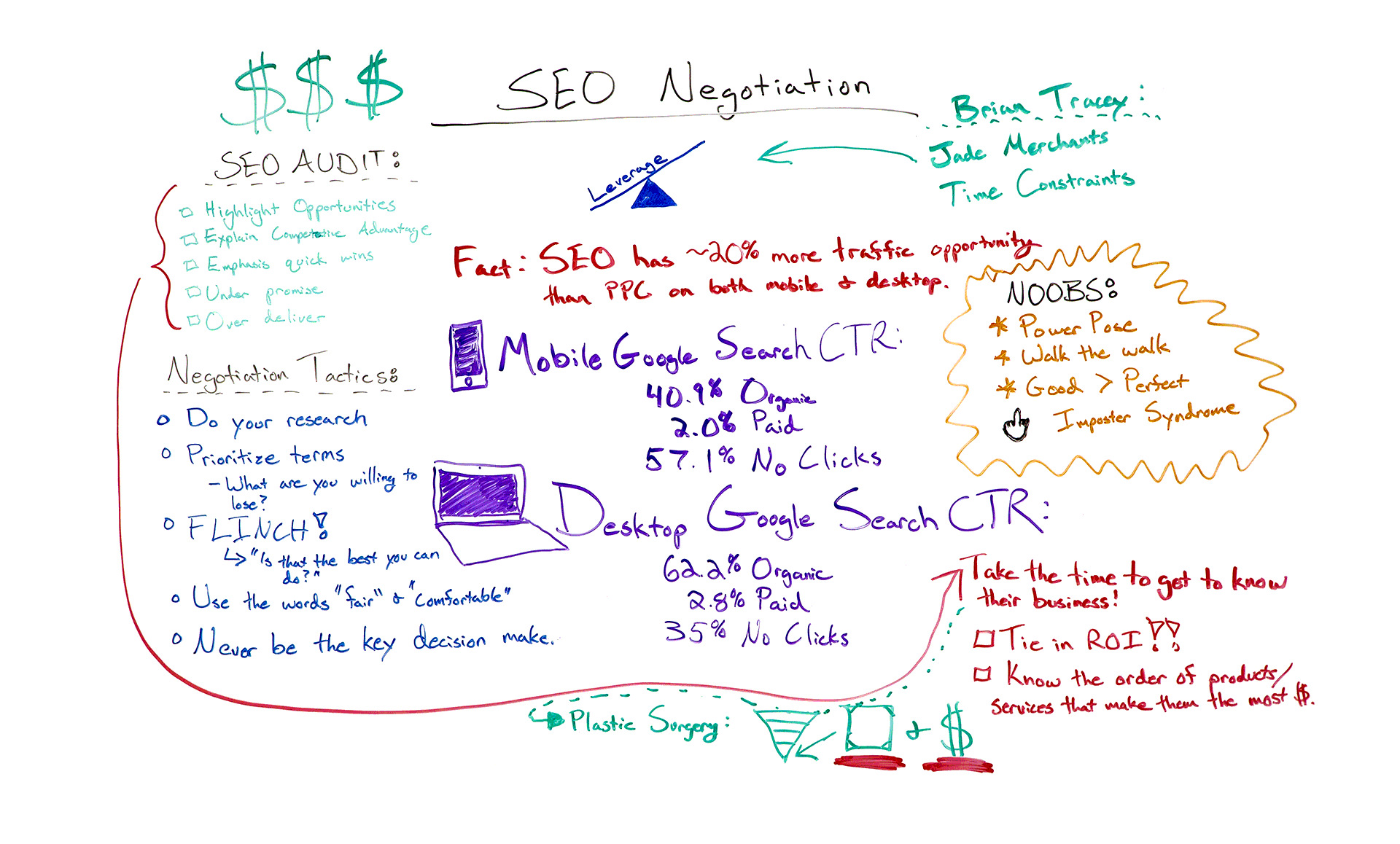


 Exemplo de Mulher Cursos